|
|
|
|
|
15-463
(15-862): Computational |
![[SCS dragon logo]](scslogo.gif)
| INSTRUCTOR: Alexei (Alyosha) Efros (Office hours: Tu 5-6pm, NSH 4207) TA: Alvaro Collet (Office hours Tuesdays 3:30pm-4:30pm, NSH 235.01) Laura Trutoiu (Office hours: Wednesday 4:00 - 5:00pm, NSH 4228 Graphics LAB) UNIVERSITY UNITS: 12 SEMESTER: Spring 2010 NEWSGROUP: http://groups.google.com/group/15463_spring10_cmu (need to join Google) IMAGES: http://picasaweb.google.com/15463spring2010cmu WEB PAGE: http://graphics.cs.cmu.edu/courses/15-463/ TEXTBOOK: http://research.microsoft.com/en-us/um/people/szeliski/Book/ LOCATION: GHC 4211 TIME: T R 12:00--1:20 |
|

COURSE OVERVIEW:
Computational Photography is an emerging new field created by the
convergence
of computer graphics, computer vision and photography. Its role is to
overcome the
limitations of the traditional camera by using computational techniques
to
produce a richer, more vivid, perhaps more perceptually meaningful
representation of our visual world.
The
aim of this advanced
undergraduate course is to study ways in which samples from the real
world
(images and video) can be used to generate compelling computer graphics
imagery. We will learn how to acquire, represent, and render scenes
from
digitized photographs. Several popular image-based algorithms will be
presented, with an emphasis on using these techniques to build
practical
systems. This hands-on emphasis will be reflected in the programming
assignments, in which students will have the opportunity to acquire
their own
images of indoor and outdoor scenes and develop the image analysis and
synthesis tools needed to render and view the scenes on the computer.
TOPICS TO BE COVERED:
- Cameras,
Image Formation
- Visual
Perception
- Image
and Video Processing (filtering, anti-aliasing, pyramids)
- Image
Manipulation (warping, morphing, mosaicing, matting, compositing)
- Modeling
and Synthesis using Lots of Data
- Image-Based
Lighting
- Image-Based
Rendering
- Non-photorealistic
Rendering
PREREQUISITES:
Programming experience and familiarity with linear algebra and calculus
is
assumed. Some background in computer
graphics, computer vision, or image processing is helpful.
This class does not significantly overlap with
15-462 and can be taken concurrently.
Graduate Students: a small number of graduate students will be
allowed
to take the graduate version of this course (15-862) with the
permission of the
instructor. Students taking 15-862 will be required to do more
substantial
assignments as well as a research-level final paper.
Note: if the system doesn’t
let you sign up, or puts you on the waitlist, do talk to me.
PROGRAMMING
ASSIGNMENTS:
· Project 0: The Vertigo Shot
|
Project 1: Images of the Russian Empire --
colorizing the Prokudin-Gorskii photo collection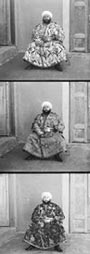 Class Choice Award: Ajoux Philippe Vincent |
Project 2: Focus on Miniatures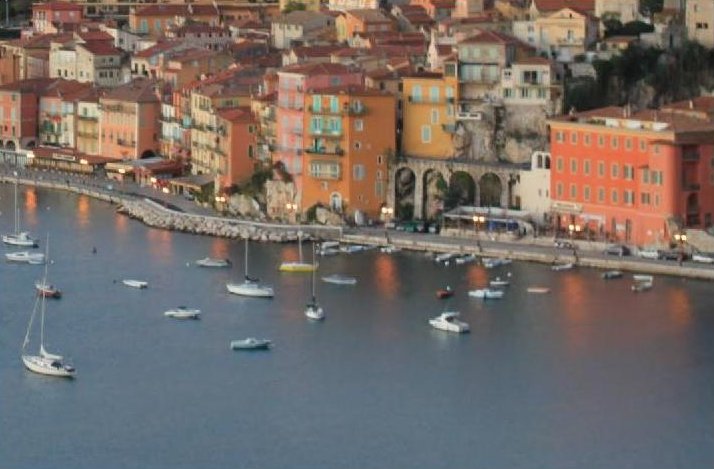 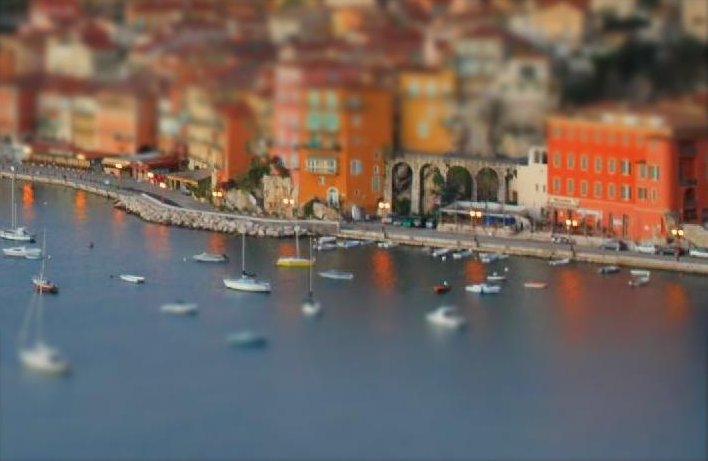
|
|
See
results |
|
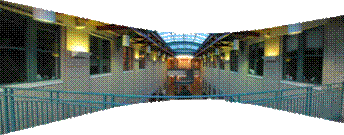
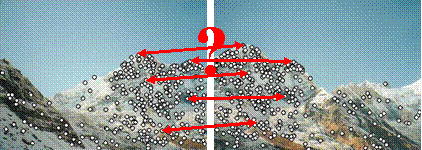
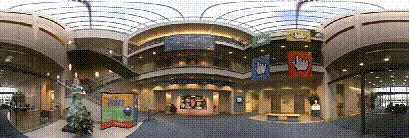
Project 4: Stitching Photo Mosaics (including
autostitching) |
| Meta Project 5 |


TEXT:
This is the first year when we will be using:
Computer
Vision: Algorithms and Applications. Richard Szeliski (available
online)
Various
course notes
and papers will be made available. Furthermore,
there is an optional textbook
that you might find helpful. It will be
placed on reserve at the Wean Hall library:
Computer
Vision: The Modern Approach, Forsyth and
There
is a number of other fine
texts that you can use for general reference:
Photography
(8th
edition), London and Upton, (a great
general guide to taking pictures)
Vision Science: Photons to
Phenomenology, Stephen Palmer (great book
on human visual perception)
Digital Image Processing, 2nd edition, Gonzalez and
Woods (a good general image processing
text)
The Art and Science of Digital Compositing, Ron Brinkmann (everything about compositing)
Multiple View Geometry in
Computer Vision, Hartley & Zisserman (a
bible on recovering 3D geometry) [on reserve]
The Computer Image, Watt and Policarpo (a
nice “vision for graphics” text, somewhat dated)
3D Computer Graphics (3rd Edition), Watt (a
good general graphics text)
Fundamentals of Computer Graphics, Peter Shirley (another
good general graphics text)
Linear Algebra and its Applications, Gilbert Strang (a
truly wonderful book on linear algebra)
CLASS
NOTES
The instructor is extremely grateful to a large number of researchers
for
making their slides available for use in this course.
Steve Seitz
and Rick Szeliski
have been
particularly kind in letting me use their wonderful lecture notes. In addition, I would like to thank Paul Debevec, Stephen Palmer, Paul Heckbert, David Forsyth, Steve Marschner and
others, as noted
in the slides. The instructor gladly
gives permission to use and modify any of the slides for academic and
research
purposes. However, please do also acknowledge the original sources
where appropriate.
CLASS
SCHEDULE:
|
CLASS DATE |
TOPICS |
Material |
|
Tu Jan 12 |
Introduction |
|
| Th Jan 14 | The Camera  |
|
| Tu Jan 19 |
Capturing
Light… in man and machine |
|
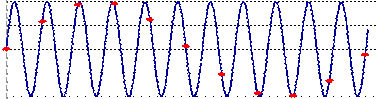
| Th Jan 21 |
Sampling
and Reconstruction |
|
|
Tu Jan 26 |
The
Frequency Domain |
|
|
Th Jan 28 |
Continue
with Frequency Domain |
|
|
Th Feb 2 |
Image
Blending and Compositing |
Additional
|
|
Th Feb 4 |
Point
Processing |
|
|
Tu |
Image
Warping |
|
|
Th |
Image
Morphing |
Slides (ppt, pdf) |
|
|
Data-driven
Methods: Faces |
Slides (ppt, pdf) Additional
|
|
Tu |
Modeling Light |
|
|
|
Homographies and
Mosaics |
|
|
Tu |
Automatic Alignment |
|
|
Th |
More Mosaic Madness |
·
Additional
|
|
Tu |
Automatic Alignment |
|
|
|
Data-driven Methods: Video and Texture |
|
Data-driven Methods: 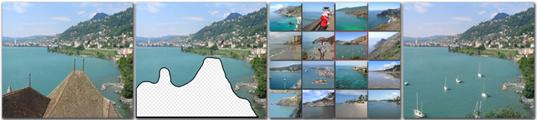 |
Slides (ppt, pdf) Additional |
|
Matting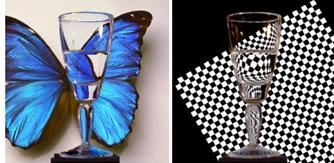 |
||
|
Single
View Reconstruction |
· |
|
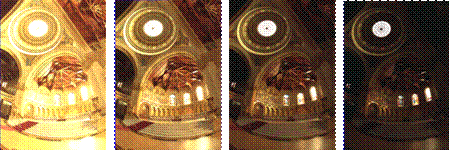
|
|
|
|
|
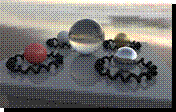   |
Slides
(ppt,
pdf) |
What
makes a Great Picture? +
Wrap-up vs. vs.  |
Slides
(ppt,
pdf) |



CAMERAS:
Although it is not required, students are highly encouraged to obtain a
digital
camera for use in the course (one can get a pretty
good camera for under $150). A camera might be available on load
from the
instructor.
METHOD OF EVALUATION:
Grading will be based on a set of programming and written assignments
(60%), an
exam (20%) and a final project (20%).
For the programming assignments, students will be allowed a
total of 5
(five) late days per semester; each additional late day will incur a
10%
penalty.
Students
taking 15-862 will also be required to submit a
conference-style paper describing their final project.
COMPUTING
FACILITIES:
All students will have access to
the graphics cluster in Gates Hall. You will need to setup your Andrew
account in the right way before you can login.
MATLAB:
Students will be encouraged to
use Matlab (with the Image Processing Toolkit) as their primary
computing
platform. Besides being a great
prototyping environment, Matlab is particularly well-suited for working
with
image data and offers tons of build-in image processing functions. Here is a link to some useful
Matlab resources
PREVIOUS OFFERINGS OF THIS
COURSE:
Previous offerings of this course can be found here.
SIMILAR
COURSES IN OTHER UNIVERSITIES:
- Computational
Photography (Hays, Brown)
- Computational
Photography SIGGRAPH Course (Raskar & Tumblin)
- Computational Camera
and Photography (Raskar, MIT Media Lab)
- Digital
and Computational Photography (Durand & Freeman, MIT)
- Computational
Photography (
- Computational
Photography (Levoy, Adams, Pulli, Stanford)
- Computational
Photography (Lazebnik, UNC)
- Computational
Photography (Fergus, NYU)
- Internet
Vision (T.Berg, SUNY)
- Computer Vision
(Seitz & Szeliski, UWashington)
- Instroduction
to Visual Computing and Visual Modeling
(Kutulakos, UToronto)
- Symposium
on Computational Photography and Video (May 2005,
MIT)
Page
design courtesy of Doug James